Ramblings on IT and Security

Month: May 2026

The Reality Behind PKI Revocation Checking

Last week I attended an interesting PKI training from CQURE. I never really had any formal PKI training before, mostly because I’ve spent years learning it the way many infrastructure engineers do, by breaking things in labs, fixing production issues, and occasionally questioning my life choices while staring at certutil output at 2 AM.

Still, I thought it would be fun to join. Most of the material was already familiar, but I met interesting people, had some good discussions, and definitely learned a few new things along the way. If you want to get into Microsoft PKI, I can genuinely recommend the training. PKI is one of those subjects that somehow manages to be both incredibly boring and extremely fascinating at the same time.

One of the topics we discussed was revocation checking. In the Microsoft world, this usually means Certificate Revocation Lists (CRLs) or the Online Certificate Status Protocol (OCSP). What many people misunderstand, however, is that revocation checking is not some universally enforced security mechanism. Whether revocation is actually checked often depends entirely on the application, service, operating system, or even the exact API being used underneath.

Continue reading
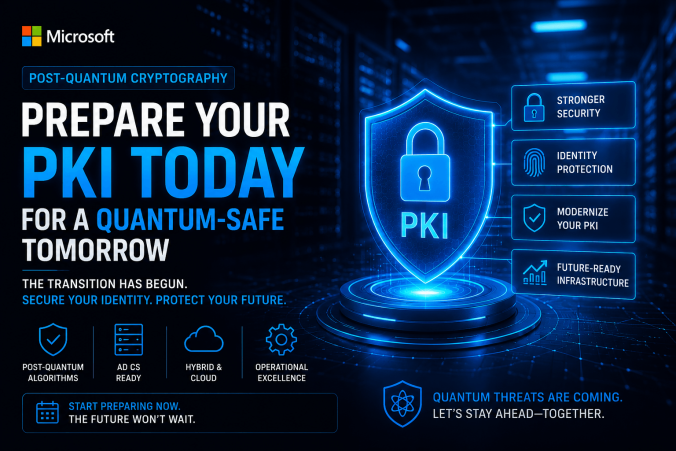
Windows Server 2025 and Post-Quantum PKI

Once upon a time, certificates were issued, systems trusted each other, smartcards authenticated users, VPNs connected remotely, web servers showed reassuring padlocks, and somewhere in a forgotten virtual machine or dusty rack server, a CA happily kept signing certificates while everyone collectively agreed not to touch it unless absolutely necessary. And to be fair, in most cases, that worked surprisingly well. Until suddenly… it didn’t.

Over the last few years, PKI has been pushed far beyond what many environments originally designed it for. Certificate usage exploded. Identity became the new security perimeter. TLS is everywhere. Code signing became critical. Zero Trust architectures increased certificate dependency. And now, on top of all that, the industry is preparing for something that used to sound like science fiction:

Post-Quantum Cryptography. (Insert some dramatic music)

During the recent Windows Server 2025 Summit sessions, Microsoft shared a major update on their Post-Quantum roadmap for Active Directory Certificate Services (AD CS), including the introduction of ML-DSA support in Windows Server 2025 and the first practical steps toward quantum-resilient PKI.

Continue reading

© 2026 Michael Waterman

Theme by Anders NorenUp ↑